

Creativity, Resilience & Change

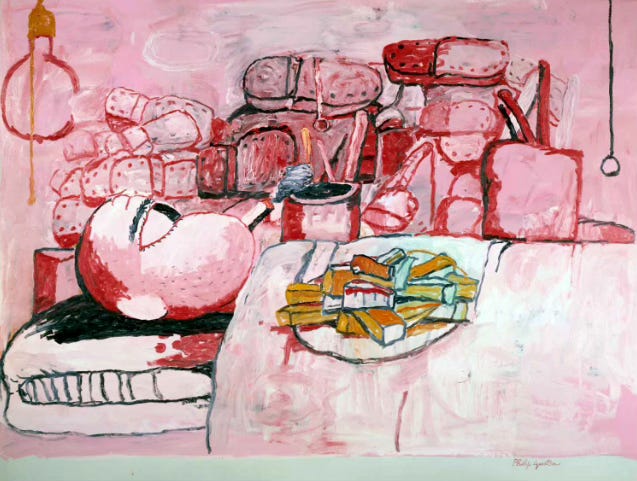
‘Probably the only thing one can really learn, the only technique to learn, is the capacity to change.’ Philip Guston
Last year I went to see the retrospective of Guston’s work at Tate Modern in London. Alongside the paintings were some of his observations about creativity and about life. The lines above stayed with me and have given me reason to reflect since.
Sometimes change is a wonderful thing: you meet someone; you fall in love; you buy a beautiful flat together. Other times it’s a right old kick in the kahunas: you meet someone; you fall in love; and they leave you for your best friend.
Either way, change is the condition of life. As the cliché goes, it is the only constant. And, as Guston says, maybe the sooner we get our heads round this the better.
Change is a condition of creativity too. I write, and I’ve always loved how writing is taking the 26 characters of the English alphabet and transforming them into words and sentences and stories. Those 26 characters themselves never change and yet they are infinitely changeable; we can never exhaust their possibilities.
As a writer, a painter, a musician, a designer, you take your lived experiences, your insights, your emotions and, through the creative act, you change them, you transform them into something new.
So in this piece I’d like to explore in more depth the relationship between creativity and change, because I believe that the more we understand this relationship, the better we’ll become not only at having ideas but also at the messy business we call life.
Late in the afternoon of September 17th 1925 in Mexico City, a trolley car collided with a wooden bus. On board was a young woman, just 18. Later she described how ‘the crash bounced us forward and a hand rail pierced me the way a sword pierces a bull.’
She and the other survivors are rushed to hospital. Her injuries are devastating: fracture of the 3rd and 4thlumbar vertebrae; triple fracture to pelvis; approximately 11 fractures to right leg; dislocation of right shoulder; stomach wound due to metal rod entering left side and exiting through vagina.
But, against the odds - and the predictions of the doctors - the young woman survives. Her name is Frida Kahlo.
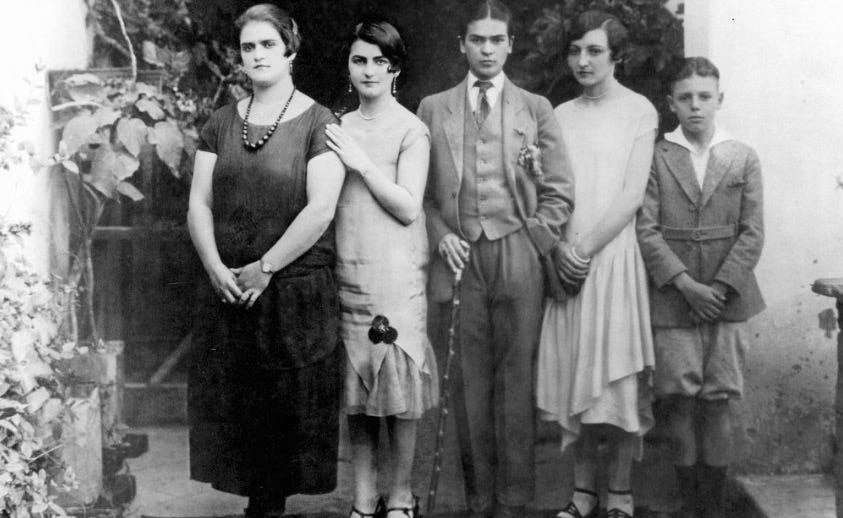
Even before the accident Frida had experimented with change. In this early family portrait you see her resolutely dressed as a man. But the accident would transform every aspect of her life. The many months she spent recuperating derailed her medical studies: she would no longer be a doctor. Instead, during the long days she was confined to hospital, she asked for an easel and some paints to pass the time. And so it was that a chance event on the streets of Mexico City put a queer, disabled, dark skinned woman on the path to becoming one of the great artists of the 20th century.
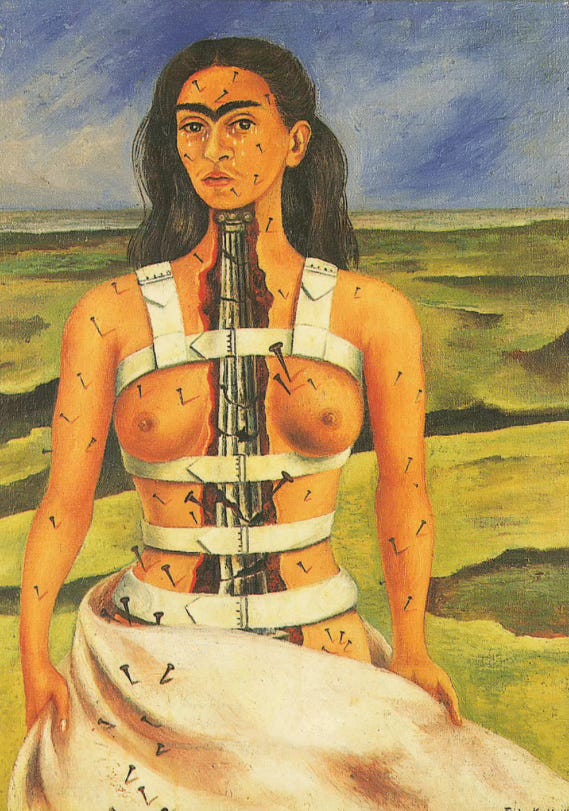
The accident left Frida in pain for the rest of her life; and pain will become a theme throughout her work. In The Broken Column she depicts her body split open, held together by straps, with a shattered column replacing her spine. Her skin is pierced with nails; the landscape around her is barren. It is a portrait of pain. And yet she holds our gaze. She stands tall. We see defiance and resilience. It’s almost if she’s saying, ‘I will make art out of that which would break me.’
To begin with at least Frida’s fame was eclipsed by that of her husband, Diego Rivera. He was 22 years her senior, and not the most prepossessing of people, but the relationship was passionate and profound, even if there would be affairs on both sides. The most notorious of which was Diego’s fling with Frida’s sister.
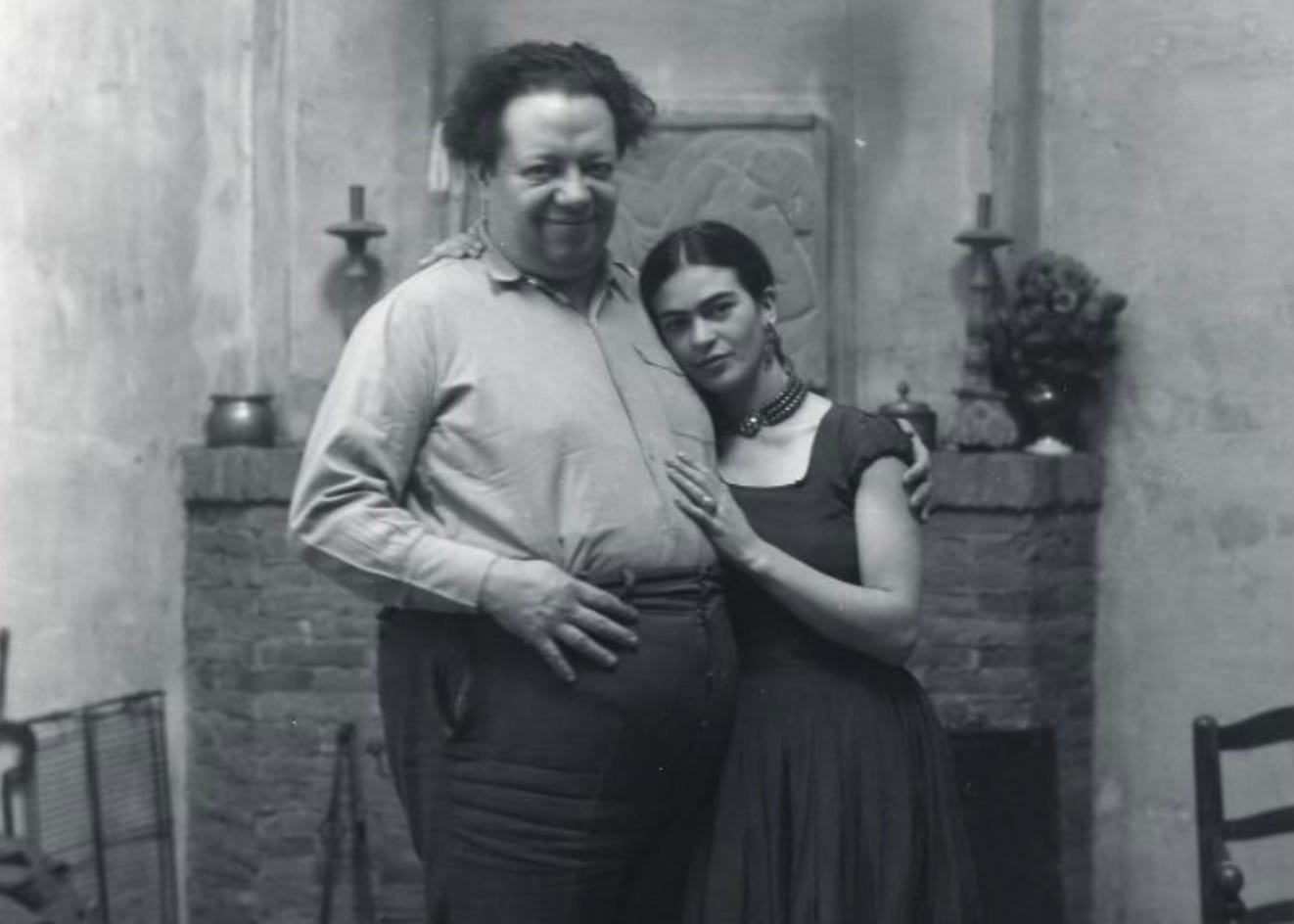
Shortly afterwards, in a move that would nearly break Frida, Diego filed for divorce. Frida said, ‘There have been two great accidents in my life. One was the trolley, and the other was Diego. Diego was by far the worst.’
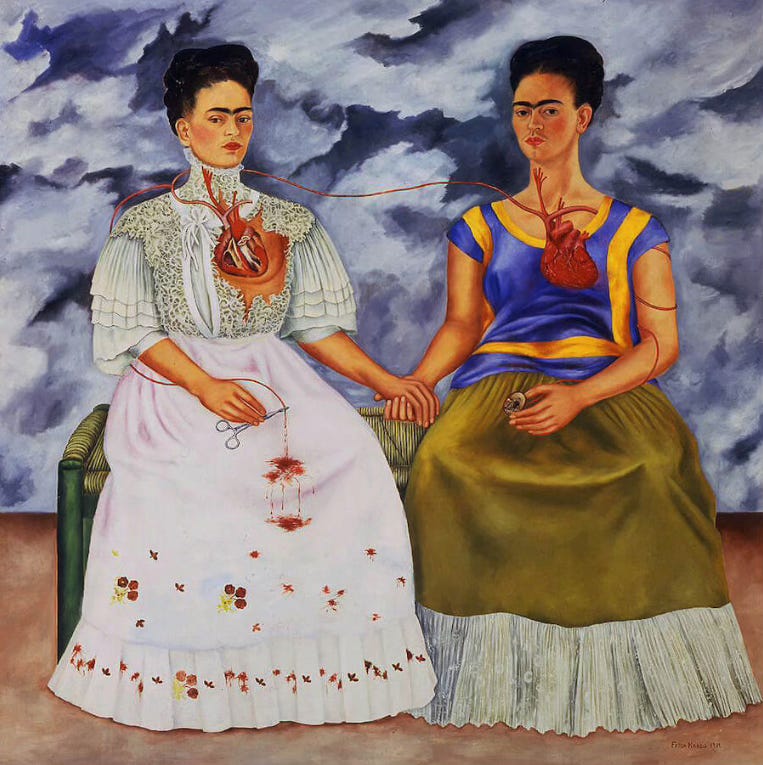
During the divorce Frida made one of her most famous works: The Two Fridas. We see two versions of her sitting side-by-side. One Frida has a heart that is exposed and bleeding; the other’s heart is whole. One wears European dress, as Frida did when she met Diego, the other wears Mexican dress, for which Frida would later be celebrated. The painting is about change: the transition from the old self to the emerging self. But it says change is messy. We can hold on to two versions of ourselves at the same time. It’s no accident that right in the centre of the image the two Fridas hold hands. Frida herself said …
‘Nothing is absolute. Everything changes, everything moves, everything revolves, everything flies and goes away.’
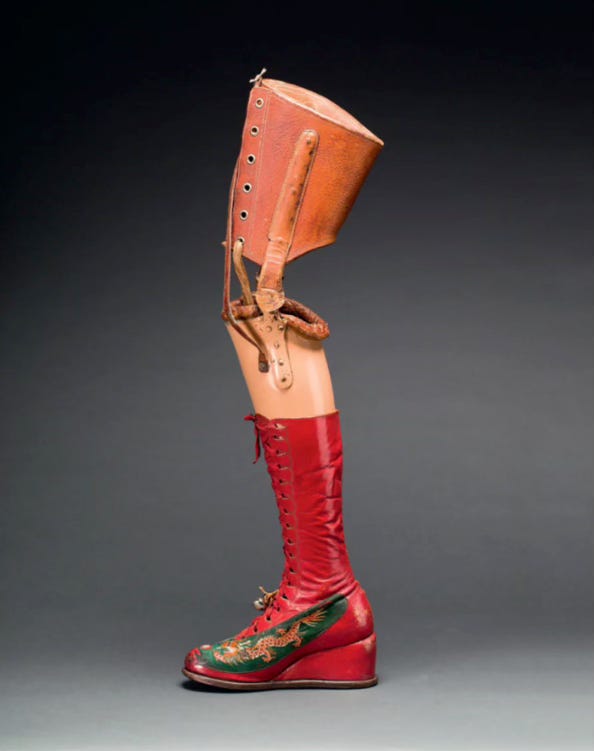
Frida’s life was marked by pain. There was the physical pain as a consequence of the accident that led to a lifetime dependence on drugs and alcohol. (She famously said, ‘I drink to drown my sorrows, but the bastards have learned how to swim.’) And there was the emotional pain during her long, tempestuous relationship with Diego. Yet throughout her life Frida used her creativity to transform this pain into something positive and meaningful. And you see this right across her artistic output. She’d decorate the medical corsets she was forced to wear. And when, just before her death her leg was amputated, she even decorated the artificial limb that she was given.
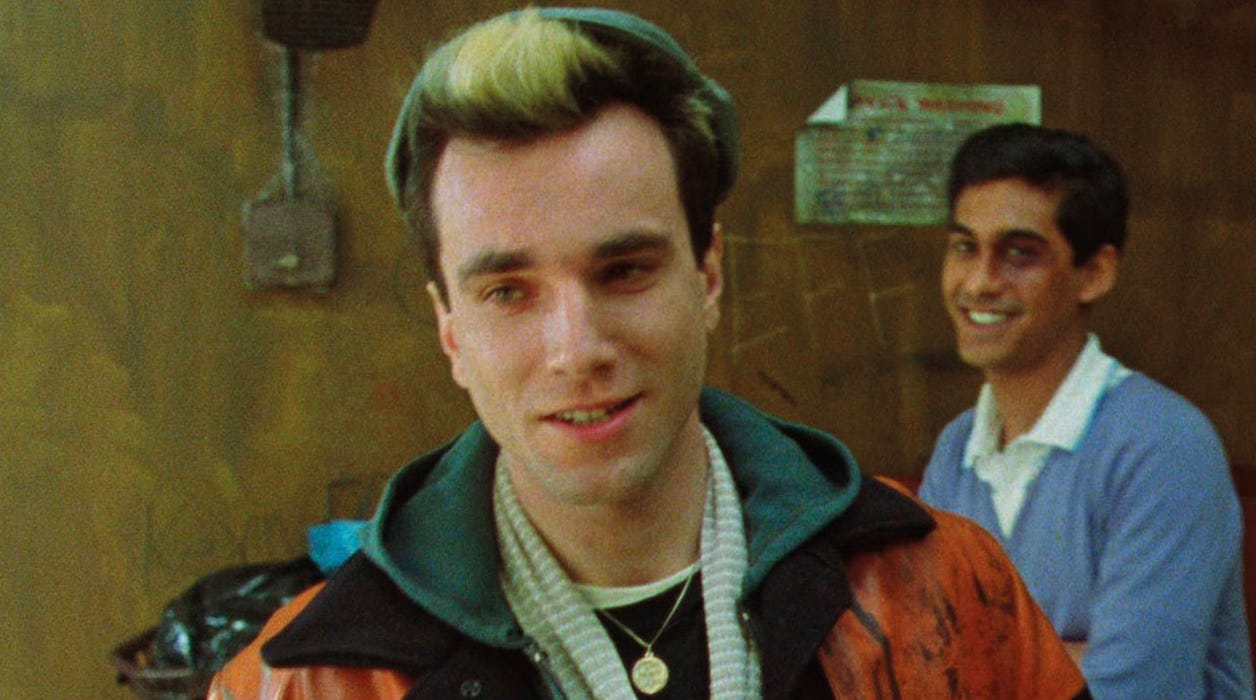
While Frida’s work is utterly distinctive she is far from alone in using pain to fuel her artistic practice. A more recent example is that of the British Pakistani writer Hanif Kureishi - perhaps most famous for My Beautiful Launderette in which a young, pre-Oscar winning Daniel Day Lewis plays a gay skinhead.
On Boxing Day 2022 Hanif was sitting in his girlfriend’s apartment in Rome, smoking a joint and watching Liverpool play Aston Villa. Mo Salah had just scored when Hanif fainted. He woke up in a pool of blood. The fall had rendered him paraplegic: able to speak, but unable to move any of his limbs. And so began a journey of rehabilitation that’s still ongoing today.
What’s different to Hanif’s story, compared to others who’ve experienced a change of similarly devastating proportions, is that almost from the moment it happened he decided he was going to write about it: ‘I am determined to keep writing, it has never mattered to me more.’
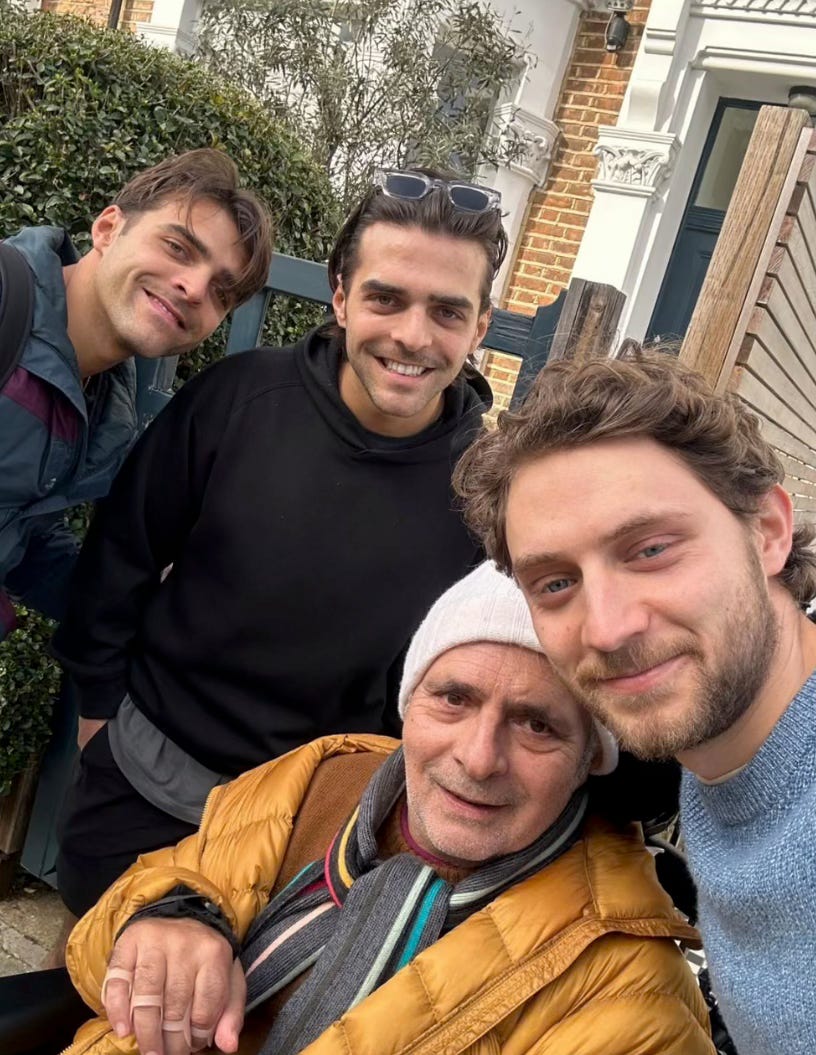
Now if you’re wondering how Hanif, having lost the use of his hands, is able to write the answer is with the help of his sons. Every day they’d sit with him and he’d dictate to them. The text became a blog (here on Substack) and the blog became a book. And as you read Shattered you can track how the process we saw in Frida is happening in Hanif. Here are just a few extracts …
‘Two weeks ago a bomb went off in my life which has also shattered the lives of those around me. My partner, my children, my friends.’
‘Every day when I dictate these thoughts, I open what is left of my broken body to give form to this chaos I have fallen into, to stop myself from dying inside.’
‘I wouldn’t advise having an accident like mine, but I would say that lying completely inert and silent in a drab room on the outskirts of Rome, without much distraction, is certainly good for creativity. Deprived of newspapers, music and all the rest of it, you will find yourself becoming imaginative.’
‘Since my accident, my life has changed, and I’m in dialogue with people most of the day. I miss my previous existence because of my ability to do certain things, like scratch my arse and go to a restaurant, but these new conversations have proven to be a fascinating innovation.’
‘I wish what had happened to me had never happened, but there isn’t a family on the planet that will evade catastrophe or disaster. Out of these unexpected breaks, there must be new opportunities for creativity.’
And then finally …
‘We are in constant development, never the same as yesterday. All the time we are changing, there is no going back. My world has taken a zig where previously it zagged; it has been smashed, remade and altered, and there is nothing I can do about it. But I will not go under; I will make something of this.’
While we celebrate great writers and artists and musicians for their creativity there is a second quality essential to all their endeavours, one that often goes under the radar and is inalienably associated with change. It’s loud and clear in that final statement from Hanif – ‘I will not go under; I will make something of this.’ I’m talking, of course, of resilience.
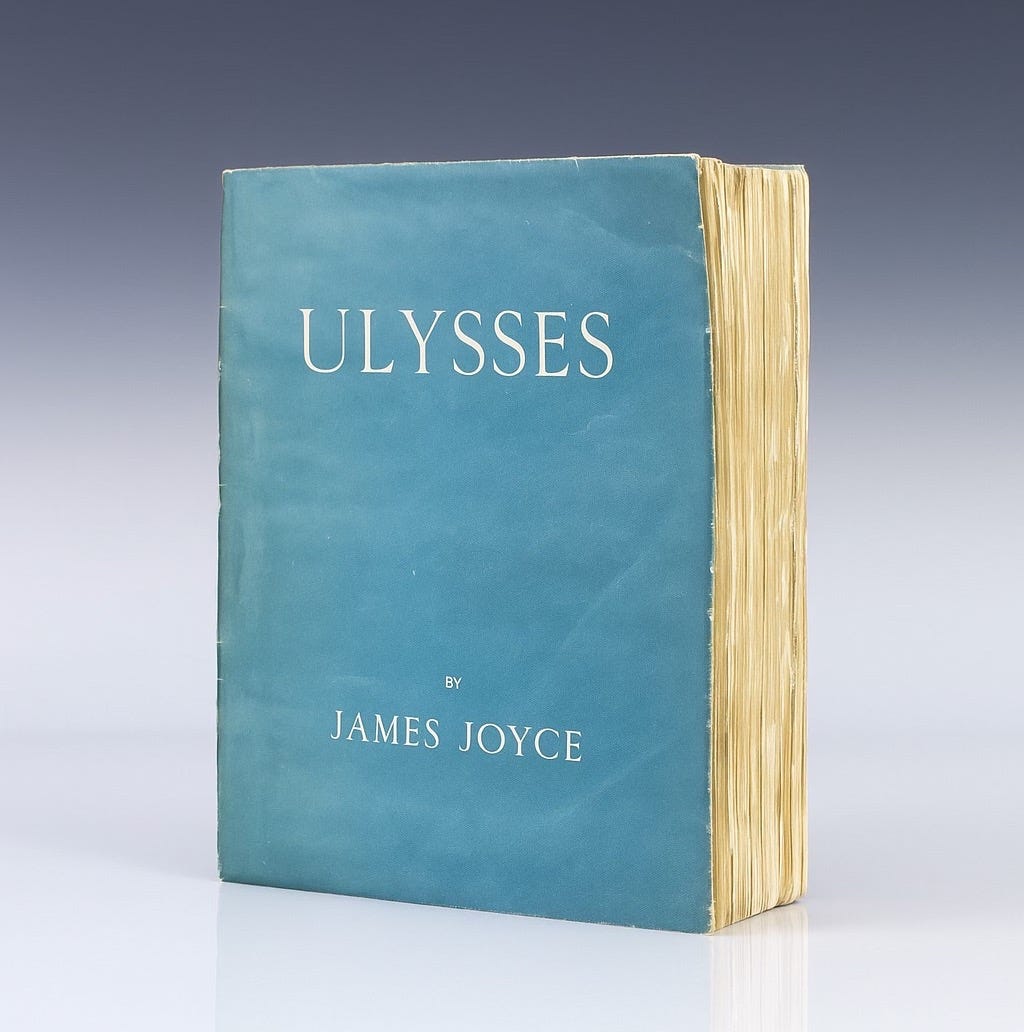
Above is a first edition of James Joyce’s Ulysses, currently trading on eBay at £55,000. Completed just over 100 years ago Ulysses is one of the great novels, if not the great novel, of the 20th century. When it was published it changed everything. Before Ulysses, readers had been used to a single narrator guiding them through the story; now that security was gone. Writers normally adhered to the rules of grammar and syntax; Joyce didn’t. Traditionally in a novel there’d be a delineation between the interior world of a character and the exterior world in which they lived; not in Ulysses. There were no quotation marks. Sometimes no punctuation. There wasn’t even a consistent style from chapter to chapter. James Joyce single handedly changed the parameters of an entire genre, and modernism in literature was born. There have been few great writers since who have not said they owe an enormous debt to Joyce. But while many people have heard of Ulysess, few have actually read it, and even fewer still know just how arduous the writing of it was.
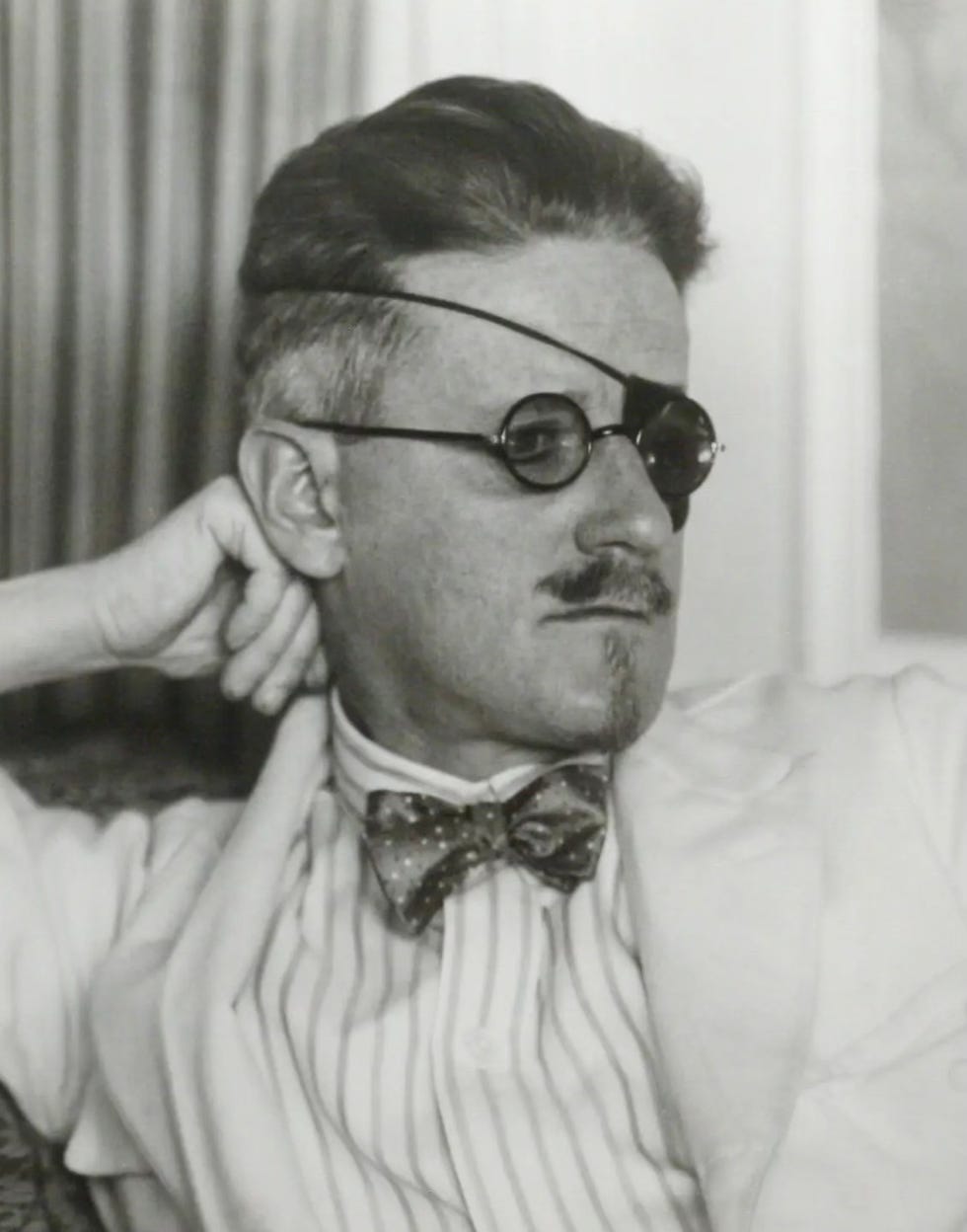
First there was Joyce’s health. He suffered from an excruciating condition called iritis. It came in bouts and would begin with a spasm of pain so acute that Joyce would be writhing around on the floor, convinced his eyeball was going to burst open. Doctors managed to offer some temporary relief by injecting atropine directly into the eye. The problem was that atropine is toxic. And this led to fainting and hallucinations. They also tried injecting him with arsenic and phosphorous; applying a fistful of leeches to his hair; even removing all his teeth because there was a belief that dental bacteria caused eye disease. None of it worked. For much of the time he was writing, Joyce’s vision was so poor that he had only ‘ten percent vision in one eye and none in the other.’ He risked blindness to get the book written.
And then there were his family circumstances. Writing didn’t pay well and Joyce and his young family moved from country to country and tiny apartment to tiny apartment. Relying on intermittent support from patrons, they’d have to flee when they could no longer pay the bills - not ideal creative conditions.
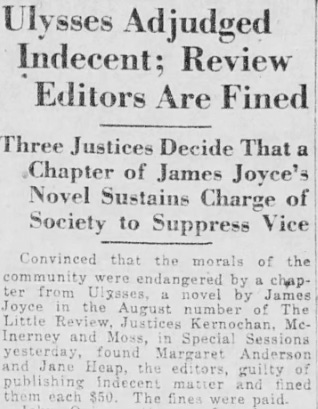
After 7 years the book was finally finished. Joyce told his friends that he felt like he had just given birth to an elephant. But as soon as Ulysses was published, it was banned. Judges on both sides of the Atlantic decreed that it was obscene. Joyce would have to wait another 12 years before the book was legally available in the States and another 15 before it was openly printed in England.
Now, I think we can probably agree that Frida Kahlo, Hanif Kureishi and James Joyce are fairly exceptional individuals. But there are three things all of us have in common with them …
Sooner or later we all get shat on by life. Every single person reading this piece knows - or will know - what heartbreak, loss and pain feel like.
Two, we each have much deeper reserves of resilience than we might think before we are tested. The ability to keep on keeping on.
And three, all human beings possess the innate creativity required to transform pain and suffering into something that has value through the power of art.
As Maya Angelou, one of my creative heroes put it …
‘We delight in the beauty of the butterfly, but rarely admit the changes it has gone through to achieve that beauty.’
Let’s turn our gaze now from the impact of change on individuals to the impact of change on a group. In 1966 Beatlemania was at its most manic …
The Beatles first love had always been performing in front of a live audience. But now the crowds are so large and there’s so much screaming that they can’t hear themselves play. Their 100 watt Vox amplifiers are no match for crowds of 100,000 people. Ringo has to resort to watching Paul’s back bobbing up and down to try and find the beat. They’re trapped in a circus of their own success.
And then John Lennon casually lets slip that they’ve become bigger than Jesus …
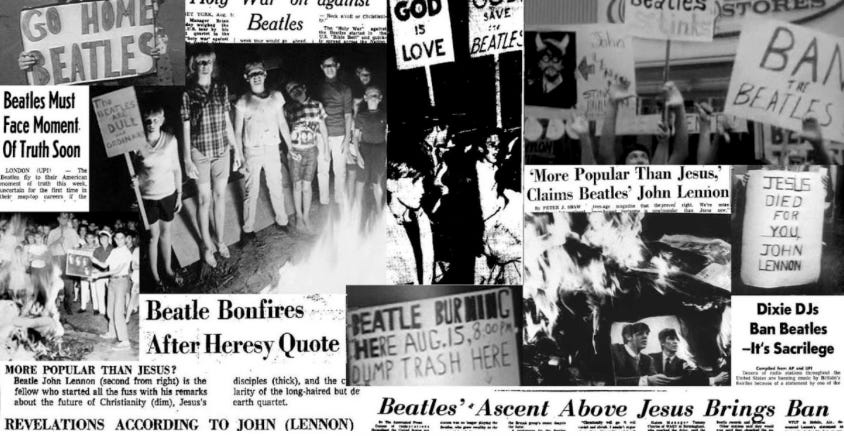
Conservative America goes into a frenzy. There are public burnings of Beatles’ memorabilia. DJ’s in the south smash their records live on air. There are threats of snipers. The band have to travel within the iron ring of a police convoy.
It’s all got a bit too much. This is a critical juncture for the band. They can no longer do the thing they love. Maybe it’s all over?
But the Beatles being the Beatles, they don’t see this change as a curtailment. Instead they turn it into a creative opportunity.
Up until this point when a band went into a recording studio to make an album they’d be there for a matter of days. Their task would be to lay down the songs as cleanly as they could, the way they played them live. But now, all of a sudden, the Beatles have a lot more time on their hands. So they decide they’re going to do something that no band has ever done before – they’re going to use the studio itself as an instrument. They’re going to do things in the studio that can only be done in the studio. And what happens next changes the way pop music is made forever.
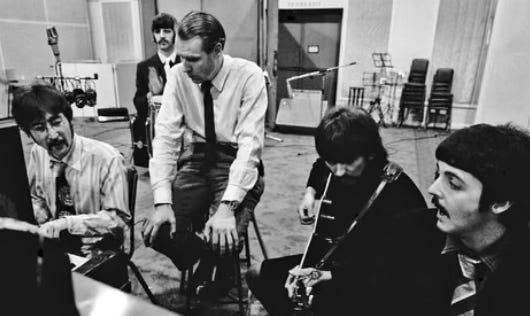
Together with their producer George Martin the band push studio technology to entirely new places. Working 12, sometimes 14 hour days, they invent a bunch of techniques that will have a huge impact on music in the decades to come: ADT or artificial double tracking, invented for John cause he hated having to sing something twice; reversed guitars; close miking on drums; putting vocals through a big rotating cabinet called a Leslie speaker; and tape looping – which was a kind of analogue sampling.
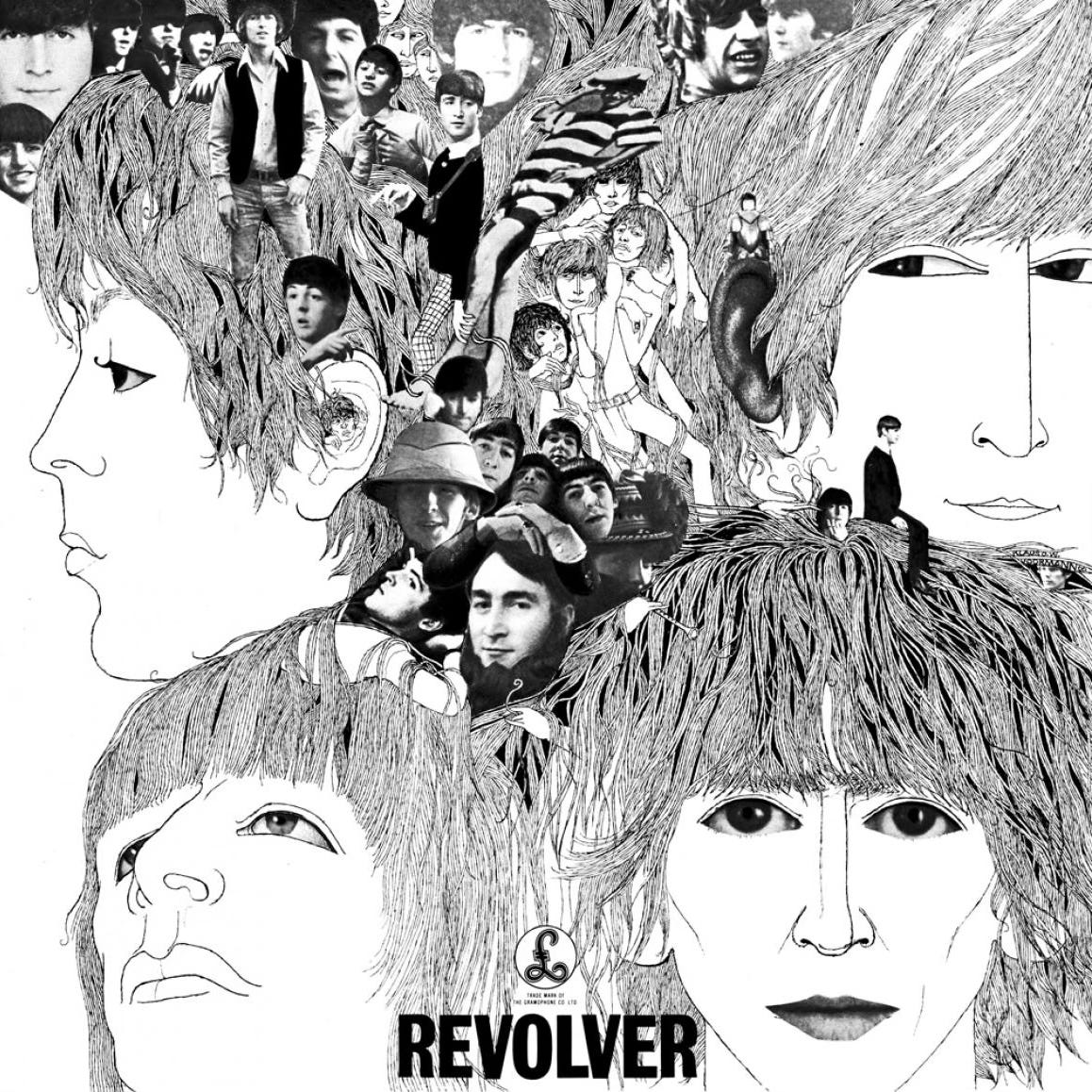
And the result of all this innovation is the album Revolver, which, for my money contains the best Beatles tune of all time. One that stills sounds as fresh today as it did 60 years ago. It’s the final track on the album but the first one they recorded. A tune that’s a reflection of the band’s experiments with Eastern mysticism and acid. And it wouldn’t exist were it not for the Beatles confinement. It is, in case you’re wondering, Tomorrow Never Knows.
So, we’ve seen how change that is painful can be transformed into something powerful and meaningful through the creative act. We’ve seen how an enforced change can be reframed as an opportunity, if you’re prepared to see it as such. What are the implications for creativity if your organisation is abruptly changed from within?
Let’s travel further back in time now to the Massachusetts Institute of Technology, MIT, in 1943. The Americans have entered the Second World War. And they’ve concluded that the only way to stop the Luftwaffe and U Boats sowing destruction across the skies and seas is to rapidly improve the allies’ radar technology. So they gather all the greatest scientific minds they can muster and instruct them to up sticks and start work at MIT. The problem is that there’s nowhere to put them. So construction begins on a new building - which will come to be known as Building 20.
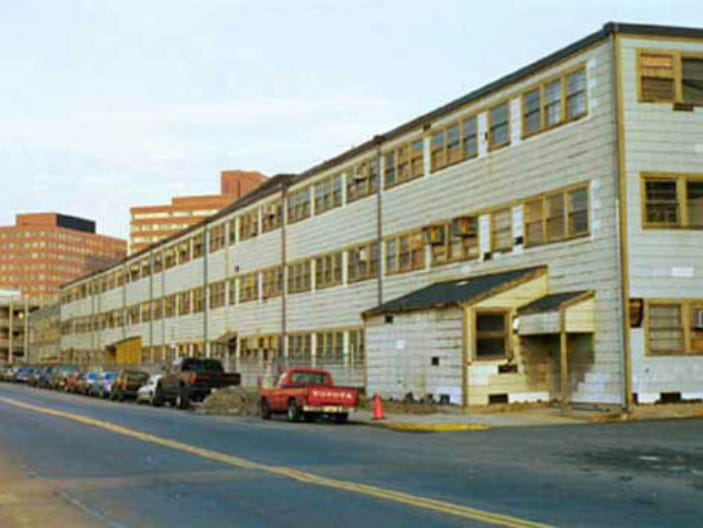
Time is tight. So Building 20 is pretty much thrown together in a few days. One of the students has said it was like watching a time-lapse film but in real time. The building is made of cheap materials like plywood, breeze blocks and … asbestos. Permission is given for this somewhat dubious construction on the understanding that it will be demolished no later than six months after the end of the war.
As a result of the combined efforts of the scientists, the allies improve their radar technology. The Luftwaffe and the U Boats are overcome and the war is won. But then the US Government introduces the GI bill: if you’ve served as a soldier you’re entitled to a free tertiary education. Suddenly MIT has hundreds of extra students. And the university realise that if they knock Building 20 down they’ll have even less space, so Building 20 stays standing … until 1998.
Now you’ve got to understand that Building 20 is really flimsy: there’s no insulation; it’s too hot in summer and too cold in winter. It’s chaotic: the eccentric room numbering system means that even long term occupants are always getting lost. So how come it survives so long?
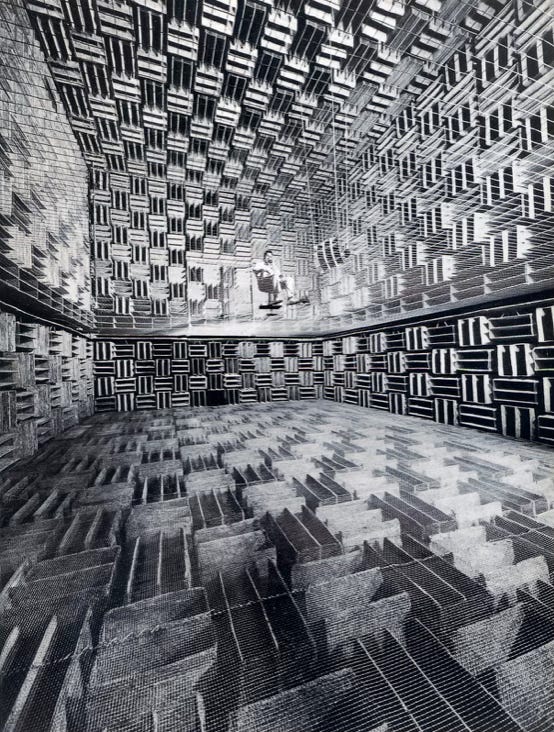
Well something happens that no one had envisaged. Building 20 becomes a hotbed of creativity and innovation. It is the birthplace of the world’s first atomic clock and the world’s first video game, Spacewar. An email is sent there for the very first time. Harold Edgerton develops high speed photography, while just along the corridor Naom Chomsky does his groundbreaking work in linguistics. A man called Leo Baranek builds the world’s first anechoic chamber - a room so quiet you can hear the sound of your own heartbeat. And Amir Bose begins experiments in acoustics that will lead to the foundation of the Bose Corporation. No fewer than nine Nobel Prize Winners will make their discoveries there.
So what are the correlations between this oversized garden shed and decades of award winning innovation?
The first is flexibility. It’s so flimsy you can change the building on a whim. If your experiment needs you to reconfigure a room or change the plug points you don’t have to contact building services and put in a proposal and wait months for contractors, you just do it yourself. As one professor puts it, ‘If you don’t like a wall, you can just stick your elbow right through.’
The second is subtler but even more powerful. Remember the eccentric room numbering system? Well, people were always getting lost and wandering into the wrong meetings. So computer scientists would end up chatting to audio engineers. Musicians would fall into conversation with biologists. And there was an incredibly fertile atmosphere of cross pollination.
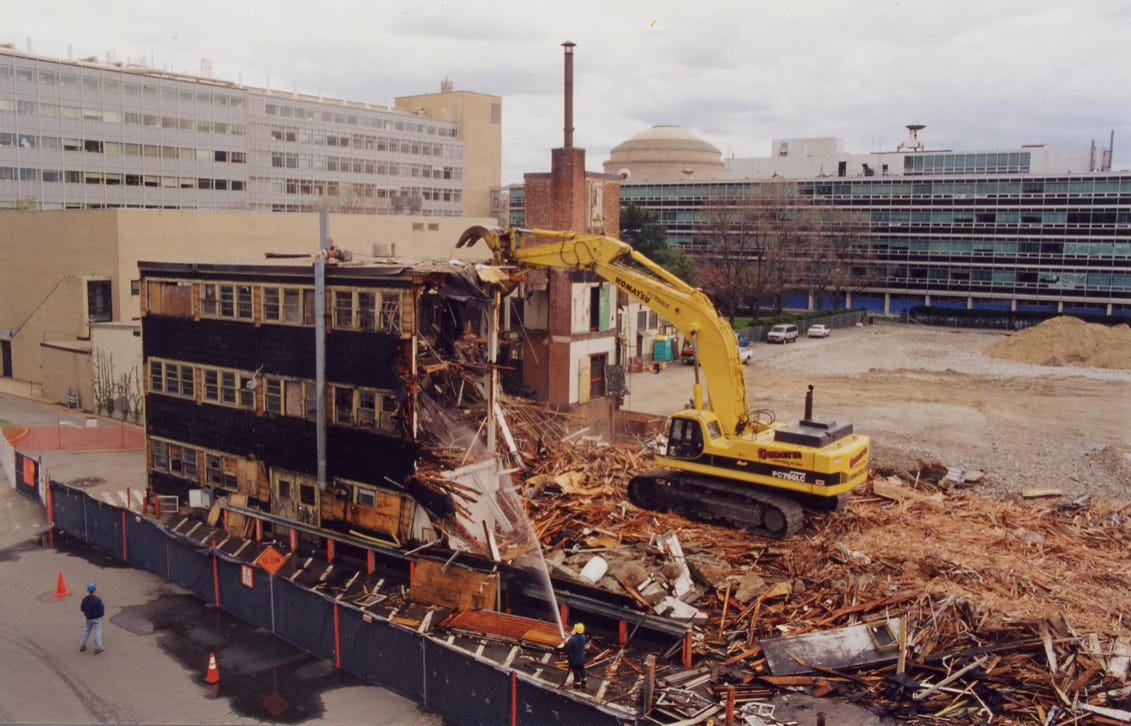
By the end of the 90’s all that asbestos really was becoming a problem and the decision was taken to knock Building 20 down. By then it had become known as ‘the magical incubator’ and ‘the greatest cooperative research establishment in the history of the world.’ Students past and present held a wake. You can watch the wake on YouTube. One of the former students, Nelson Yiang, sums it up like this …
‘People got together and shared ideas and words without really worrying about who you were or where you came from, and I think that’s the secret.’
Building 20 is a story of how an enforced institutional change that, on the face of it, looks pretty uninspiring can have unexpected positive consequences. It’s a story of how groundbreaking ideas are more likely when people step out of their lane and collaborate. And it’s also a story of how if you give people agency and allow them to change things for the better from within, everyone benefits.
So, we’ve considered change on an individual, group and institutional level. What if we go even bigger? What if we explore a massive social and cultural change, one that many people consider an existential threat to human creativity itself?
I am, of course, talking about Artificial Intelligence.
Is it just a matter of time before we’re all replaced by machines?
Short answer … I don’t think so.
In order to explain why, we need to go to the heart of creativity itself and consider what a great idea really is in the first place. I’ve spent way longer than I probably should’ve trying to define what makes a great creative idea great and this is my best go …
‘A simple truth told in a surprising way’
That’s it. When you think of any really great film, novel, song or TV commercial, at the heart of it is an observation about the human experience - a simple truth - one that resonates with us on a profound level because we know it to be true from our own lived experience. But it’s not enough just to share that truth. It has to be presented to an audience ‘in a surprising way’; one that we’ve not quite seen or heard before. And it’s the extent of the surprise that determines whether an idea is just good or great.
There’s a book by Dr Karen Nelson Field called The Attention Economy and in it she explains the role of surprise …
‘If you ever want to truly and completely grab an individual’s attention, then you must break their prediction. When a prediction fails, the brain becomes primed to take in and hold onto new information.’
The latest research in neuroscience tells us that the brain is basically an energy saving device. Its function is to get us through life with the minimum calorific cost possible. And the way it does this is by constantly making predictions about what’s likely to happen next in any given situation. So long as the world conforms to these prediction, we stay in autopilot. This is why the morning commute is usually so forgettable. But now and again something will happen that our brain is not expecting and - boom - we’re alert, our senses are switched on, we’re primed, engaged and ready to respond.
Now let’s look at the way LLM’s or ‘Large Language Models’ like Chat GPT work. They hoover up vast swathes of human generated content. Then they look for patterns. Once they understand the patterns they’re able to create their own versions, word by word, or pixel by pixel, generating the next most likely thing according to all the examples they’ve consumed. So, by definition, there can be no surprise because what we’re seeing is an amalgam of previous instances. This is why AI can only produce work that is good, not great.
Here’s a piece of research I came across a little while ago …
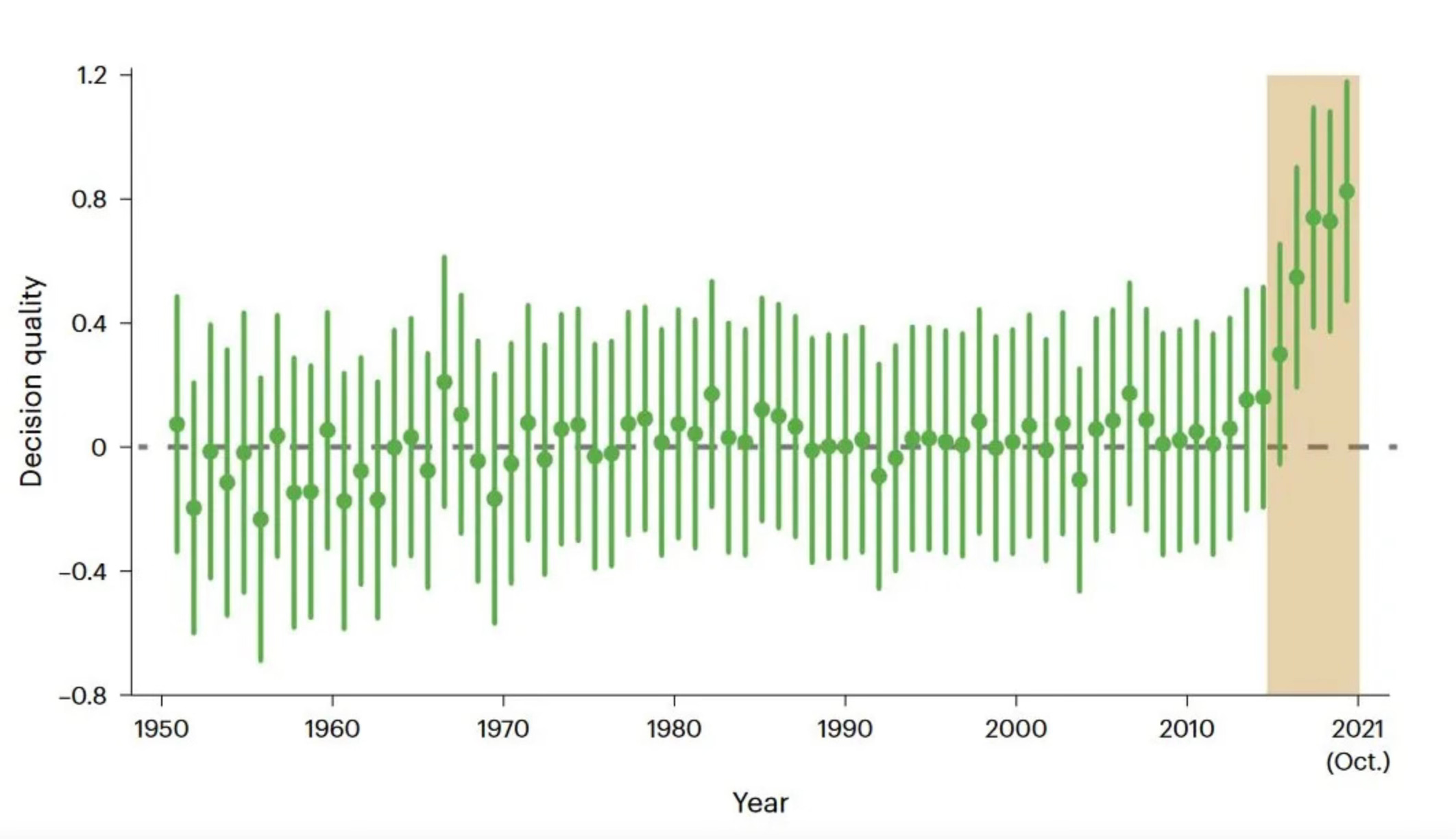
It’s all about the board game Go which is really popular in parts of Asia. The chart shows the performance of tournament Go players over the past 70 years. The bottom of each green line is the decision quality of the worst performing player, the top is that of the best performing player and the dot is the mean. It’s all pretty stable until 2015 when something extraordinary happens: for the very first time, computer scientists succeed in designing an algorithm that can beat any human player. As soon as this algorithm is introduced the performance stats go crazy. The decision quality of the worst players shoots up so that it’s now as good as the best players’ before AI. And the performance of the best players becomes so good it goes off the chart.
Why? Because all those default strategies that players had relied on for decades are no longer effective. The algorithm can beat them. So all players have to completely rethink the way they play the game. Artificial intelligence becomes, in scientific terms, a massive kick up the arse: a spur to rewrite the parameters and push into new territory.
A lot of people in the creative industries are concerned at the moment that they will lose their job to an algorithm. And maybe if you’re content to produce work that is just ‘good’ then that will be true. But so long as you’re in the game of striving for great, I think there are grounds to be optimistic. I think this technology could be a catalyst to push into some really exciting places.
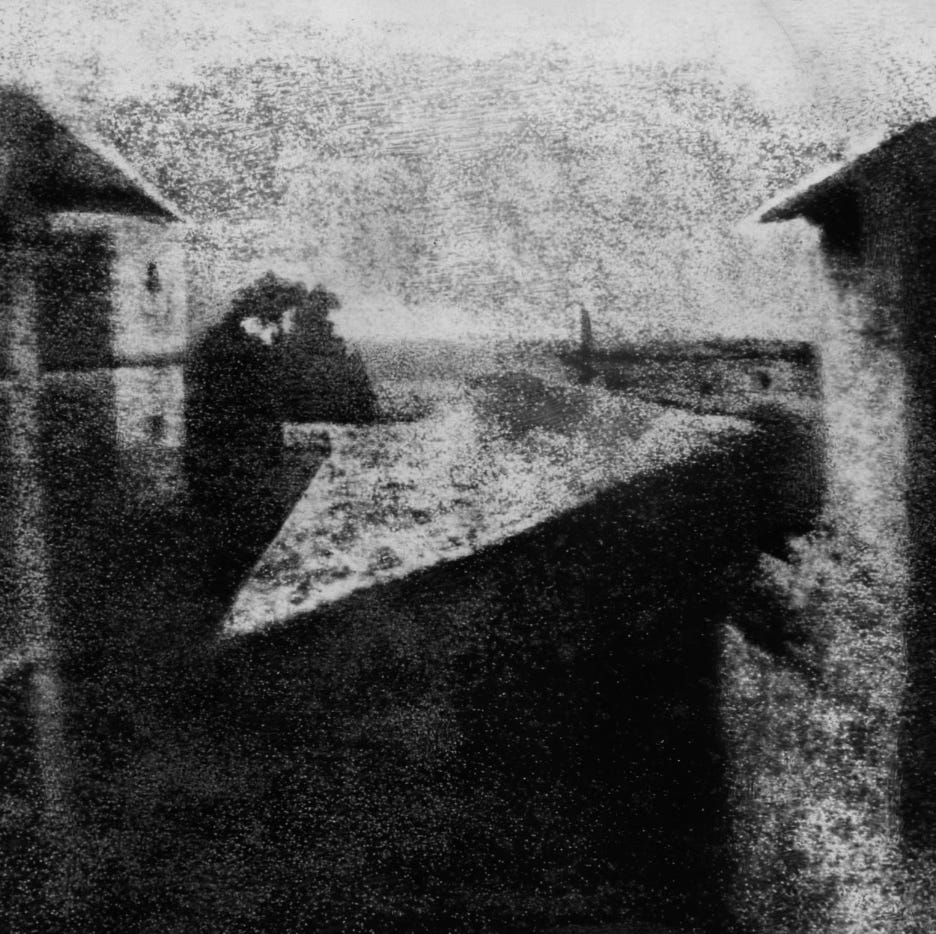
This is the world’s earliest surviving photograph. View from the Window at Le Gras by Nicéphore Niépce. It was taken in either 1826 or 1827 – no one can agree exactly when – but we do know the exposure took several hours. It was the beginning of a revolution. The new technology of photography would very rapidly take a hold across the world. Probably at roughly the same pace as AI has over this past decade. And the most common prediction was that photography would be the death of painting. After all, why bother with the expensive and time consuming business of painting when you could make an image more cheaply and more quickly with a machine called a camera?
Now here are two paintings of a sunrise.
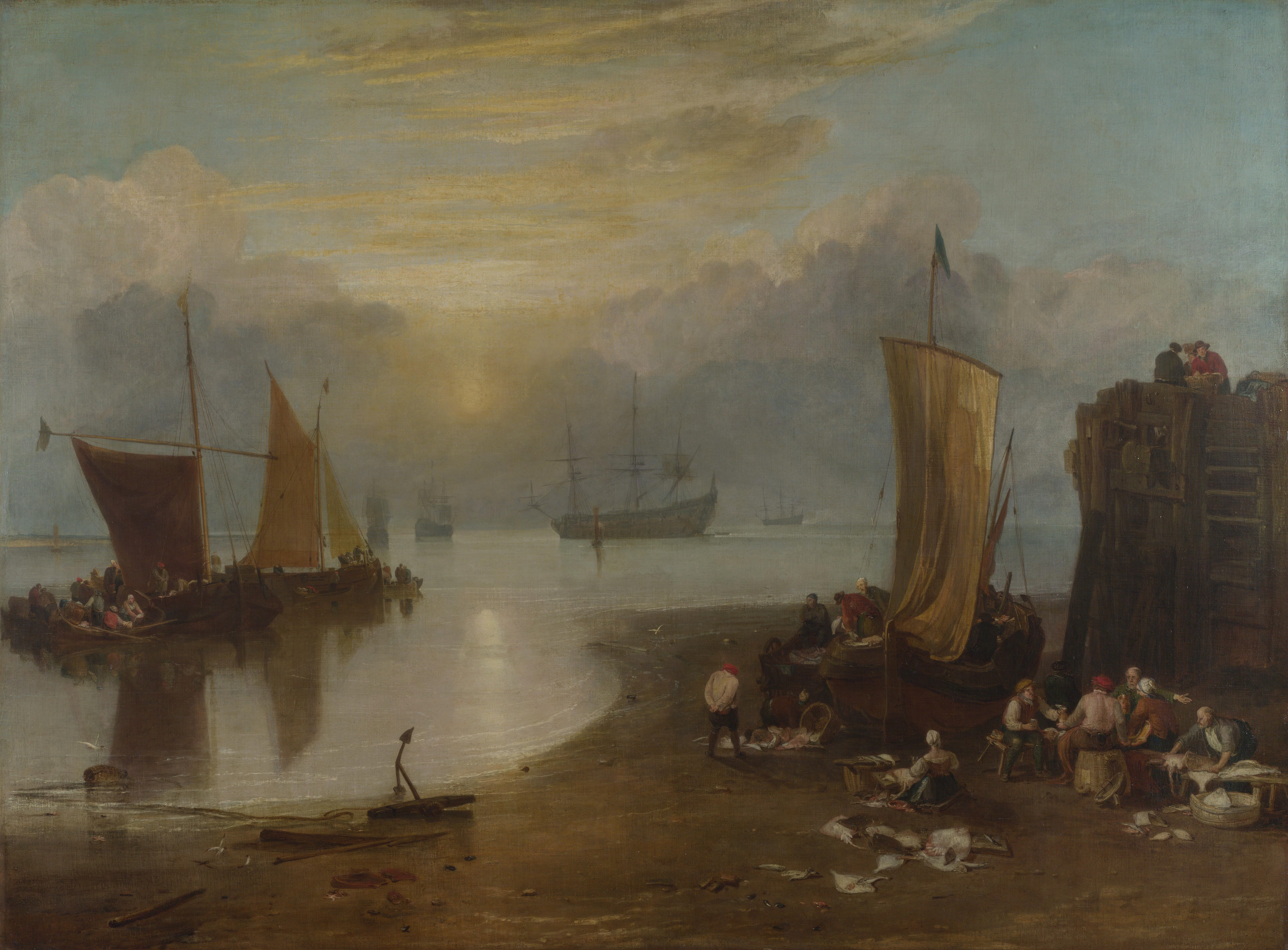
The first is Sun Rising Through Vapour by Turner, 1807, twenty years before Niépce stepped out on to his balcony. Note the realism, the clarity, the detail. We can see the rigging on the ships moored out in the bay. We can read each gesture of the people gathered on the shore. We can even make out discarded objects and individual rocks on the shoreline.
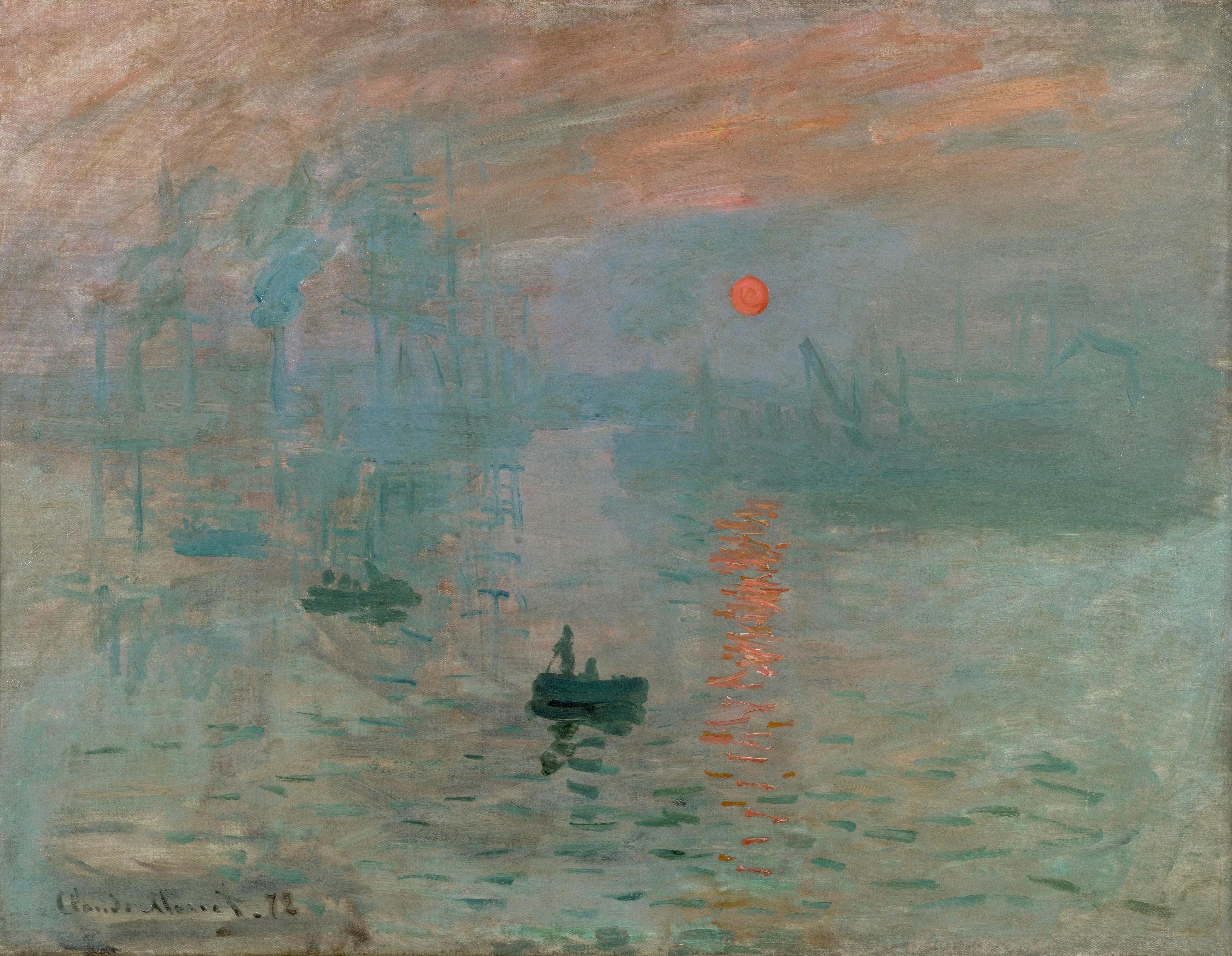
And now a second painting of a sunrise. This one from 1872, several decades after the invention of the medium of photography. It’s by Monet. The title is Impression, Sunrise. Same subject, but a very different execution. Gone is the realism, the fine detail. Instead we have an image that is now more about feeling than form. Painting has been freed from the burden of realism.
Photography didn’t kill painting. It allowed artists to push their medium into new places; impressionism, cubism, surrealism, abstract expressionism, all these movements would not have happened were it not for that day in 1826 - or 1827 - that Nicéphore Niépce spent on his roof.
The question, I believe, isn’t how soon human creativity will be replaced by AI - I don’t believe that can ever really happen - the real question is what unimagined spaces will the invention of AI allow us to explore next?
So we’ve considered change from all angles: we’ve looked at how each of us possesses the capacity to be able to transform negative experiences into something valuable and meaningful through the creative act; we’ve seen how our reserves of resilience are much deeper than we might think; we’ve heard how an enforced change can sometimes be a creative opportunity; how organisations that are fluid and flexible are more likely to have better ideas; and how a massive cultural change, like artificial intelligence, could push human creativity into a new dimension.
I’d like to finish by going small. Really small. Below is a clip of neuroplasticity in action - ‘neuro’ for brain, ‘plasticity’ for malleable or changeable. Though the clip finishes a little abruptly you can clearly see two neurons tentatively wiring together.
Until relatively recently we believed that post-adolescence our brain architecture became fixed, or hardwired. Systems of thinking and behaviour were thought to be permanent. And it was pretty much downhill from there, with a loss of roughly 85,000 brain cells a day until it was time to shuffle off this mortal coil. We know now this is wrong. Our brains are endlessly flexible - ‘plastic’ - if we allow them to be. Each of us has the capacity for profound neurological change at any stage in our lives.
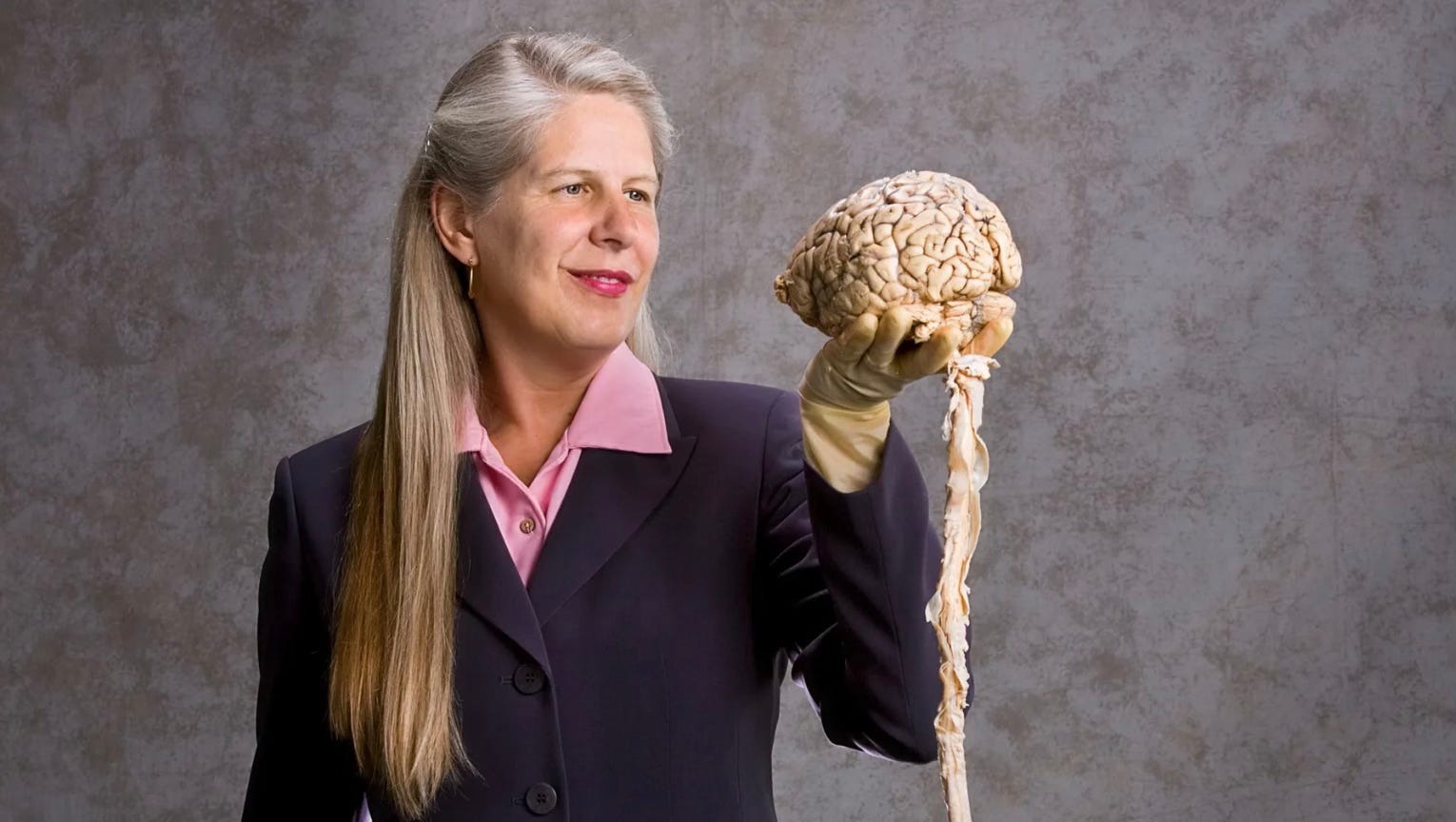
Jill Bolte Taylor is a Harvard trained neuroanatomist. On December 10th 1996 a blood vessel exploded in the left half of her brain. Because she was a brain scientist she knew immediately what was happening. She tried to dial the number of her department - believing that they’d be able to hear from her voice what was wrong - but just to enter the 10 digits into the phone took her 45 minutes. Several regions in Jill’s brain had been catastrophically damaged. On the morning of the stroke she could no longer walk, talk, read, write or recall any of her life. As she put it, ‘I essentially became an infant in a woman’s body.’
But Jill knew the secret of our brain’s flexibility. She knew that neurons that fire together, wire together, just as we saw in the clip above. She understood that we can deliberately create new neural pathways.
And so Jill decided she was going to rebuild her brain, synapse by synapse, and rewire the remaining regions to learn the functions fulfilled by the networks she’d lost. Over eight years Jill rebuilt her abilities, one by one. She taught her brain to decode sounds and understand language. She slowly relearned reading and writing. And, in a process she described as recreating a mental filing system from scratch, she restored her own memories.
The wonderful thing is that Jill was really intentional about which circuits to recreate. The left hemisphere is where rumination and self-judgement - our inner critic resides. Jill decided to leave all that in the past. As she describes it, ‘I let go of the circuitry of worry.’ Previously she’d been very analytical, almost to a fault. Now she allowed herself to be right hemisphere dominant; to be calmer, more intuitive, more present.
As she puts it in her brilliant Ted Talk, ‘The old Jill lived by the clock, the new Jill lives by curiosity.’ Jill is an extraordinary person. But her brain is no different from ours (apart from maybe being a little bigger). Each of us has the capacity to grow and change and evolve for as long as we are alive, if we choose to do so.
We have the choice: do we wander mindlessly around, staring into our little screens, scrolling and scrolling and scrolling. Or do we look up, be curious, seek new relationships, new challenges, and new experiences and deliberately set out to do things that have not yet been done, safe in the knowledge that if things do go awry our creativity will always enable us to make the best of them.
Maybe Guston was right, maybe there’s only one thing we ever really need to learn, and that is the capacity to change.